

The narrative surrounding senior living often focuses on avoiding the move to a “nursing home”. However, longitudinal research consistently proves that senior living is not the last resort; it is often the solution that improves the quality of life for residents and provides essential relief to the overburdened family unit.
In this article, we draw on the recent NIC-NORC Senior Housing Research Portfolio and associated reports, to showcase how senior living provides the solution to both the individual older adult and the strained healthcare system. We then ask the million dollar question: How do we get older adults and their families to consider senior living earlier?
Recent research provides powerful evidence that senior living communities are a solution to the caregiving crisis, improving outcomes for residents.
The NIC-NORC study provides direct evidence that life in senior housing is beneficial:
Residents in senior living report higher levels of social engagement and connectivity compared to those living at home, combating the loneliness and isolation often associated with aging alone.
Residents report higher rates of physical activity and engagement in wellness programs, leading to better overall health maintenance.
Residents reported a perception of improved health after moving in, suggesting the environment and support systems contribute positively to well-being.
This data reframes the entire sales pitch: communities are not places of decline; they are centers of vitality that actively support longevity and social health.
The decision to move into senior living often occurs only when the family caregiver has reached a breaking point, facing burnout, financial strain, and job loss. Marketing must acknowledge this reality.
Studies confirm that unpaid family caregiving costs the U.S. economy billions annually. For the individual family, the lack of predictable financial planning leads to using savings for immediate, unplanned care expenses. Senior living provides financial predictability, allowing families to plan and safeguard their future.
While some Medicaid programs provide limited financial compensation or support for family caregivers (through Home and Community-Based Services Waivers), navigating these complex systems often adds to the caregiver’s administrative burden and financial strain.
Choosing a community-based care setting, often funded by Medicaid waivers, transfers the complex financial responsibility and care coordination from the family to the authorized provider, offering far greater financial predictability and relief.
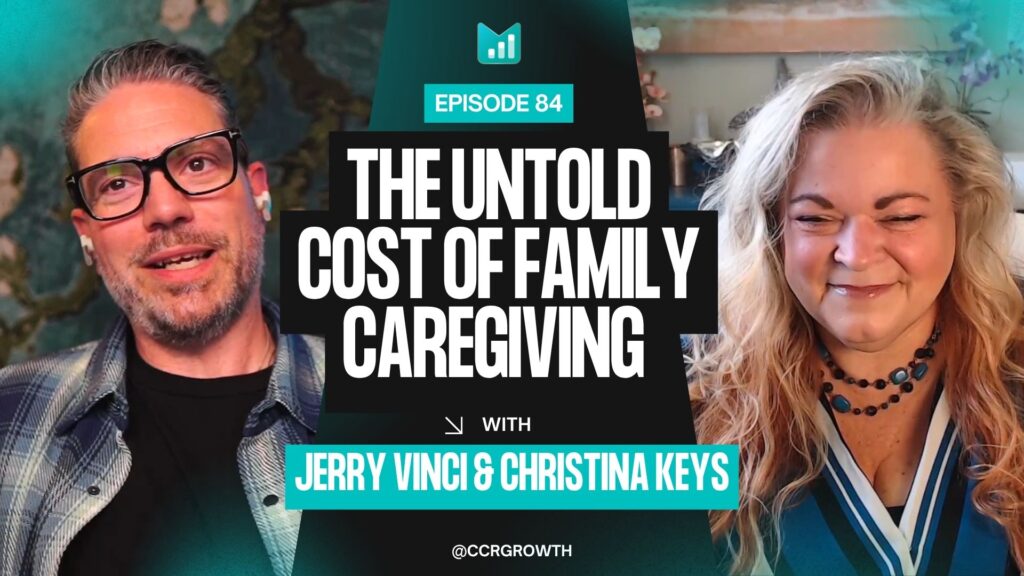
As detailed in our recent interview with advocate Christina Keys, caregiving frequently leads to an identity crisis and intense grief. Senior living provides the necessary physical and emotional relief for family members to redefine their roles and begin their own recovery journey.
By moving in sooner, the older adult gains social currency and the family avoids the devastating emotional and financial cost of prolonged, unsupported caregiving.
Utilizing a data-informed approach to translate this scientific evidence into an effective marketing and sales strategy is crucial to a senior living community’s success. The goal is to use data-backed truth to overcome the emotional barrier of delay.