

how-to-build-affordable-assisted-living-through-adaptive-reuse

Episode 113

Special Guest: Melissa Brown

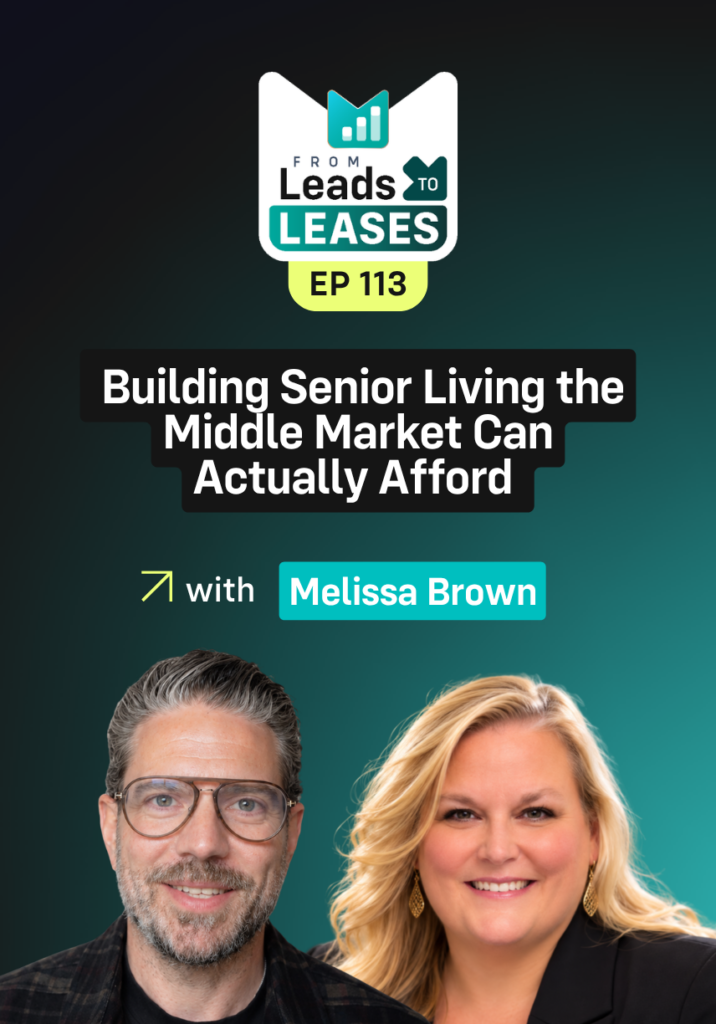
Building Senior Living the Middle Market Can Actually Afford with Melissa Brown

By 2033, an estimated 16 million middle-income seniors may not be able to afford assisted living even after counting home equity. The industry has known this is coming for years and has largely kept building past them anyway.

In this episode of From Leads to Leases, Jerry Vinci of CCR Growth sits down with Melissa Brown, Chief Operating Officer of Gravity Consulting, an occupational therapist by training who now spends most of her time on senior living development, turnarounds, and the models that make middle-market care financially viable. Melissa breaks down why the million-dollar entry fee model is aging out with the generation it was built for, how converting a vacant office building can put 45 units of assisted living online for four to eight million dollars, and why the manufactured home model may be the most underestimated senior living concept in the country right now.

Key takeaways:

  • The entry fee model is not dead yet, but the generation it was designed for is being replaced by one that thinks very differently about writing a seven-figure check.
  • The middle market is not underserved because the opportunity is small; it is underserved because the traditional model is easier to finance.
  • A manufactured home delivering 1,600 to 2,000 square feet for $250,000 to $300,000 is directly competitive with a CCRC entry fee, and most families do not know it exists.
  • Adaptive reuse of vacant office buildings can significantly reduce development timelines compared to new construction, but the biggest risk is spending heavily before bringing in someone who actually knows senior living.
  • The biggest mistake in adaptive reuse is running too far down the runway before bringing in someone who knows how licensing and unit layout actually work in a care setting.
  • Assisted living that includes pickleball courts, med spas, and scratch-made food is not a luxury; it is a direct response to ageism baked into the current model.
  • The adult child making the placement decision needs to feel like they would want to live there too.
  • Activities calendars in senior living have not meaningfully changed in 30 years, and resident responses to them have not changed much either.
  • Building an ecosystem of home care, home health, outpatient therapy, and adult day services around a community creates referral pipelines and keeps residents independent longer.
  • Malnutrition risk in senior living is, in Melissa’s words, off the charts, and rethinking food is one of the highest-impact changes an operator can make without a major capital investment.

Get in touch

Introducing

tmporl7dl8v

For communities with 10 - 50 residents

Do you own a botique senior living community? We built a dedicated, performance-based platform just for you!