Key Takeaways
- Families expect clarity around care provided, daily life, and long term support
- Emotional reassurance matters as much as factual information
- The website must reduce fear, guilt, and uncertainty during the process
- Strong websites help families make an informed decision without friction
- Alignment between messaging and real experience is critical
What Families Unconsciously Expect From a Senior Living Website
Families are not consciously listing requirements when they visit your website. Instead, they are scanning for alignment between what they feel and what they see.
They expect your website to answer questions they have not fully articulated yet. This includes concerns about quality care, the well-being of their loved one, and whether the environment will feel safe and supportive.
There is also an expectation of transparency. Families want to understand services, expenses, and what daily life looks like inside the community. If this information is unclear, it creates hesitation.
Many communities focus on amenities and surface level messaging. What families expect is something deeper. They want to understand how your team works closely together to deliver consistent care, how residents participate in daily rhythms, and how new residents adjust during the transition.
Senior Living and the Emotional Context Families Bring
The decision around senior living is rarely neutral. It is shaped by fear, worry, and often guilt.
Family members may feel like they are losing control of a situation. They may worry about whether their parents will feel lonely in a new environment. There is also concern around memory loss, health decline, and whether the care provided will truly meet evolving needs.
Your website must acknowledge this emotional context without stating it directly. The structure, language, and flow should create a sense of stability.
When families see clear explanations of support, assistance, and how caregivers engage with residents, it reduces uncertainty. When they see how a senior living community encourages residents to build friendships with friendly neighbors, it addresses concerns about isolation.
This is not about persuasion. It is about reducing emotional friction so families can move forward with confidence.
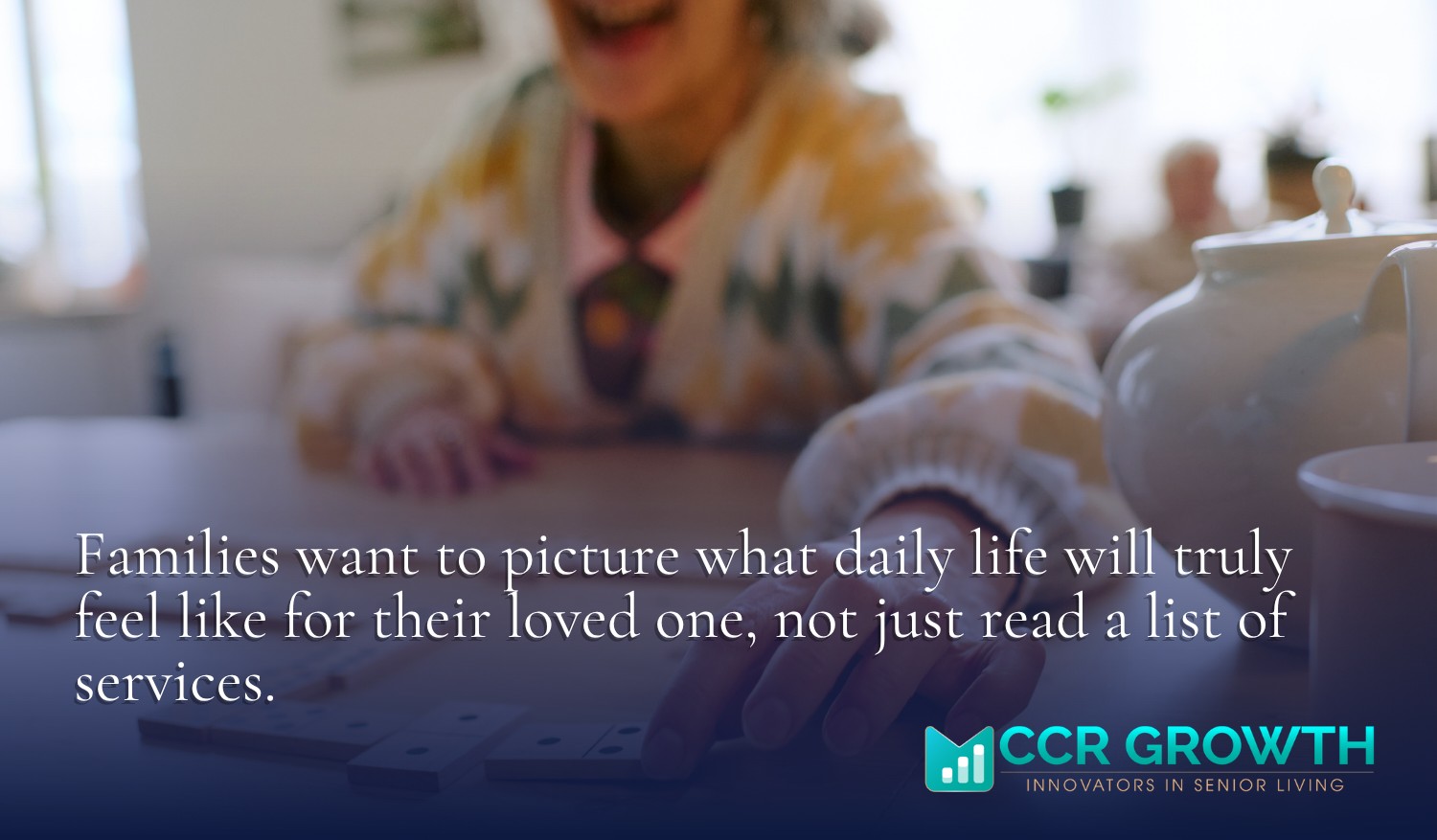
Many Families Expect to See Life, Not Just Services
Many families arrive expecting to understand what life actually looks like inside your community.
They are not just evaluating a facility. They are trying to picture their loved one living there.
This includes:
- How daily tasks are supported
- What daily rhythms feel like
- How residents interact with friends and neighbors
- How the environment supports independence and well-being
If your website only lists services, it fails to provide this clarity.
An assisted living community that communicates daily life effectively helps families visualize the transition. This reduces the fear of the unknown and supports a more informed decision.
Families Worry About the Transition Into a New Environment
The transition into a retirement living community is one of the most overlooked concerns on a website.
Families worry about how their loved one will adjust. They think about the adjustment period, whether their parents will feel comfortable, and how quickly they will build connections.
They are also thinking about themselves. Many adult children carry guilt during this process. They want reassurance that they are making the best choice, not just a practical one.
A strong website addresses this by showing how the team supports new residents from day one. It demonstrates how caregivers work closely with families, how preferences are understood, and how the environment is designed to feel welcoming.
This is where many communities lose momentum. They focus on the outcome, not the transition.
Family Caregivers Need Control and Clarity
Family caregivers often feel overwhelmed. They are managing logistics, finances, and emotional decisions at the same time.
They expect your website to restore a sense of control. This means clear information about:
Area | What Families Expect to Understand |
Care Needs | How support adapts over time |
Services | What is included and what is not |
Expenses | Transparency around money |
Process | Steps to move forward |
If any of these areas are unclear, families hesitate. They may delay outreach or look elsewhere.
A well structured website guides them through the process without confusion. It allows them to move at their own pace while still feeling supported.
The Gap Between Home Care and Senior Living Facilities
Many families compare home care with senior living facilities before making a decision.
They are weighing independence against structure, familiarity against support, and short term comfort against long term stability.
Your website should help bridge this gap.
It should show how a senior living community provides a balanced environment where seniors receive assistance while still maintaining independence. It should also highlight how social interaction, daily structure, and professional care contribute to better outcomes.
This is all about helping families understand what makes your community the right choice based on their specific concerns.
How CCR Growth Helps Align Websites With Real Expectations
Most senior living websites are built around internal assumptions. They reflect what operators believe families need to see, rather than how families actually evaluate a senior living community.
CCR Growth closes that gap.
With over 20 years of experience in senior living, the focus is on how families think, what they worry about, and what they need to feel confident moving forward. That perspective shapes how websites are structured, how messaging is positioned, and how each stage of the decision process is supported.
The result is a website that does more than present information. It actively guides families toward an informed decision. It reduces hesitation, builds trust earlier, and supports your team in converting interest into move-ins with greater consistency.
Your Website Should Make the Decision Easier
Families are not looking for perfection. They are looking for clarity, reassurance, and confidence.
If your website does not reflect what families unconsciously expect, it creates doubt. If it aligns with their emotional and practical needs, it becomes a tool that supports the right decision.
This is where growth happens.
If you want your website to do more than just exist, CCR Growth can help you turn it into a system that drives real outcomes. Reach out to our team and let’s start building a website that works as hard as your community does.
Frequently Asked Questions
What do families unconsciously expect from a senior living website?
Families expect clarity, emotional reassurance, and transparency. They want to understand care provided, daily life, and whether their loved one will feel supported in a new environment.
Why do many families worry about senior living decisions?
Many families worry about making the right choice, especially when it involves a loved one’s health, independence, and long term well-being. Fear, guilt, and uncertainty are common during the process.
How does a senior living community website influence decision making?
A well structured website helps families feel informed and confident. It reduces friction by clearly explaining services, care needs, and the transition into the community.
What role do family caregivers play when choosing assisted living?
Family caregivers often lead the decision process. They manage research, finances, and communication with communities while balancing emotional responsibility for their parents.
How should a retirement living community website address memory loss and care needs?
It should provide clear, specific information about how caregivers support residents with memory loss, how care adapts over time, and how the community ensures quality and consistency in daily life.